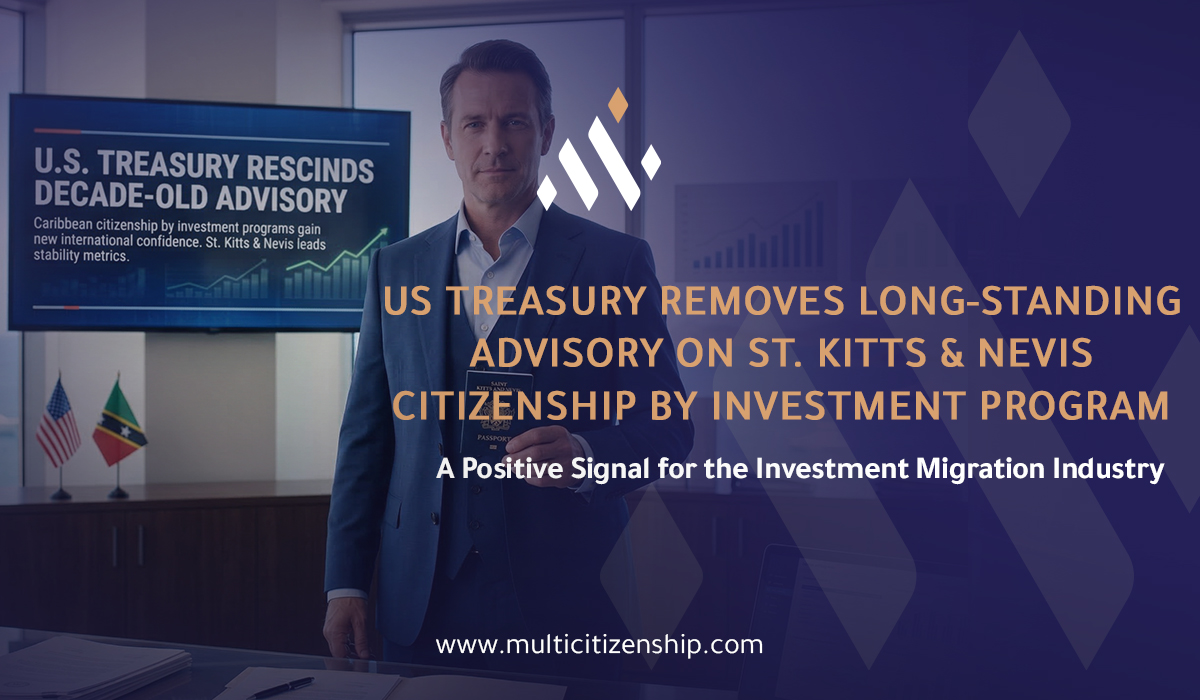
In a significant development for the global investment migration industry, the United States Department of the Treasury has officially rescinded a decade-old advisory concerning the St. Kitts & Nevis Citizenship by Investment (CBI) program.
The advisory, originally issued in 2014 by the Financial Crimes Enforcement Network (FinCEN), had warned financial institutions about potential misuse of passports obtained through the program. As of February 24, 2026, the advisory has been formally withdrawn, marking a major milestone for the world's longest-running citizenship by investment program.
Background: The 2014 FinCEN Advisory
In 2014, FinCEN issued a notice alerting U.S. financial institutions that certain foreign individuals had allegedly used St. Kitts & Nevis CBI passports to conceal their identities and potentially bypass sanctions. The advisory encouraged banks to conduct enhanced due diligence when dealing with holders of such passports.
The notice created reputational challenges for the program and influenced how financial institutions and governments viewed Caribbean citizenship programs at the time.
However, the advisory remained in place for more than a decade, even though many of the passports referenced had long since expired.
A Decade of Reform and Stronger Oversight
Over the past several years, the government of St. Kitts & Nevis has implemented extensive reforms to modernize and strengthen its CBI framework. These reforms focused on improving transparency, governance, and due diligence procedures.
Key improvements include:
- Enhanced multi-layer due diligence processes
- Collaboration with international security and screening firms
- Mandatory biometric data collection for applicants
- Structured interviews for citizenship applicants
- Higher minimum investment thresholds
- Transformation of the Citizenship by Investment Unit into a statutory authority with stronger governance
These reforms were designed to align the program with international anti-money laundering (AML) and counter-terrorism financing standards.
A Positive Signal for the Investment Migration Industry
The withdrawal of the advisory signals growing international recognition of the reforms implemented by St. Kitts & Nevis.
For the global investment migration industry, this development represents:
- Increased confidence in Caribbean citizenship programs
- Recognition of stronger compliance and regulatory frameworks
- Improved operating conditions for investors and financial institutions
Government officials described the move as confirmation that the country has successfully addressed the concerns raised more than a decade ago and restored confidence in the program's integrity.
What This Means for Investors
For individuals and families considering second citizenship, this milestone reinforces the ongoing evolution of Caribbean CBI programs toward higher standards of governance and transparency.
Programs across the region have increasingly adopted stricter due diligence, improved regulatory oversight, and stronger cooperation with international partners.
As a result, Caribbean citizenship continues to offer investors a reliable pathway to global mobility, financial diversification, and long-term security for their families.
Looking Ahead
The removal of the FinCEN advisory closes an important chapter in the history of the St. Kitts & Nevis CBI program. It reflects years of reform and highlights the growing maturity of the investment migration industry.
As global demand for alternative citizenship options continues to rise amid geopolitical uncertainty, well-regulated programs that emphasize compliance and transparency are expected to play an increasingly important role in the international mobility landscape.